The move from a house or apartment into a retirement residence, within the building’s time window. Montreal mixes walk-up plexes, condo towers, and houses, including Notre-Dame-de-Grâce, Ahuntsic, Rosemont, and the West Island.
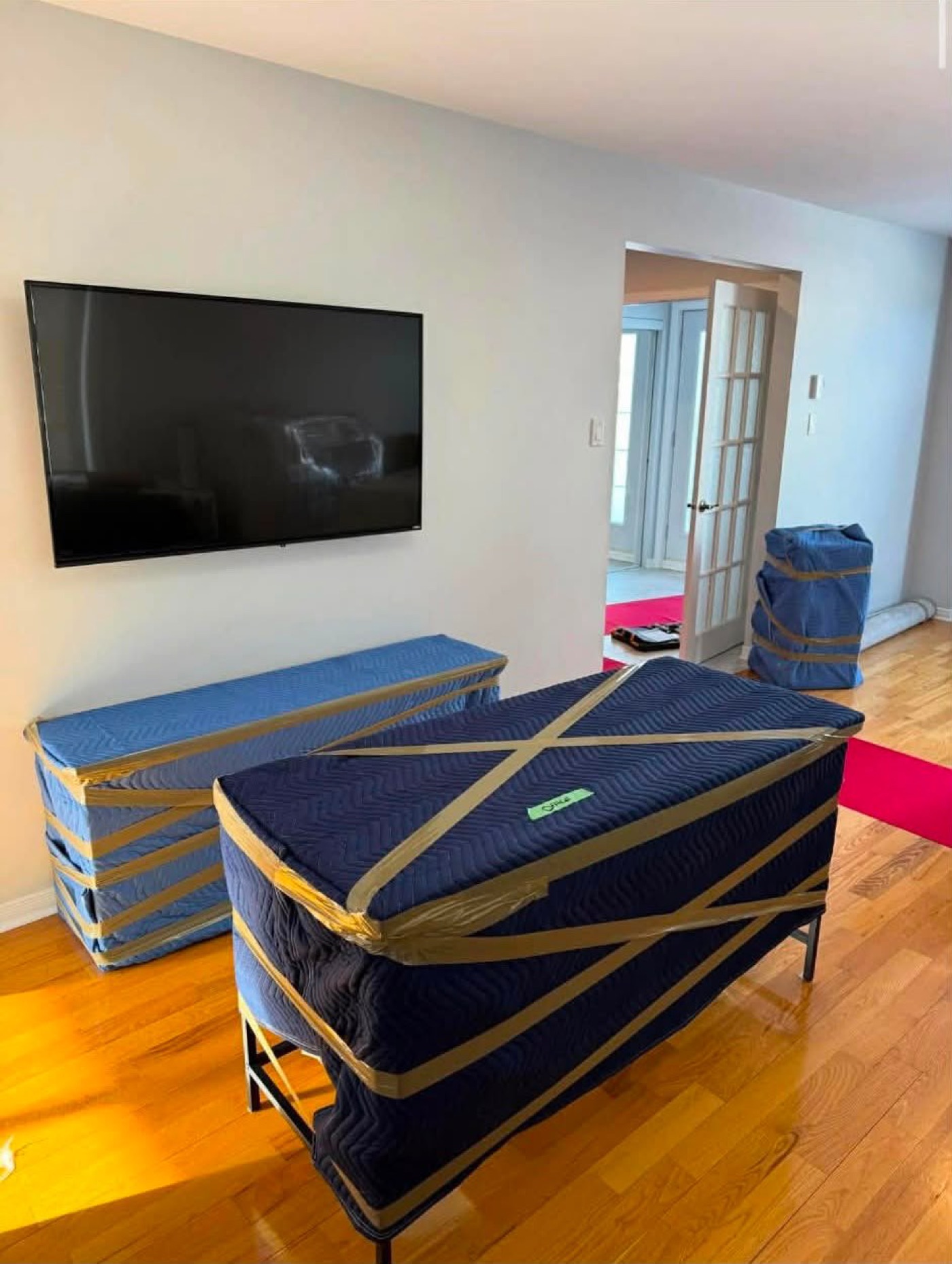
A piano and a dresser, protected before they go out.
What the service includes
A residence often has a shared elevator, a narrow hallway, and a set arrival time. We ask for those rules before moving day, and for the insurance certificate if the building wants one.
The new room is almost always smaller. We help you see what fits: the bed, a chair, the photos, the clothes, and a few kitchen items. The rest can stay with family or simply not be moved.
We place the furniture where you want it, not only inside the door. If the residence limits noise or the hour, we follow that instruction.
What is included
Coordination with the residence time window
Insurance certificate when the building asks
Door and hallway measurements when needed
Bed and main furniture set in place
Homes and access in Montreal
Many buildings require an elevator booking and a certificate of insurance. Street parking often needs a permit, and some staircases are narrow.
Residences and apartments for older adults are spread through Côte-des-Neiges, NDG, and Ville-Marie. The move-in window is often short.
The Plateau, Rosemont, Verdun, Outremont, Saint-Léonard, and the West Island are all on the same island, with very different stairs and parking.
Questions
Q1
Does La Belle Gang offer Retirement residence moving in Montreal?
Yes. Montreal mixes walk-up plexes, condo towers, and houses, including Notre-Dame-de-Grâce, Ahuntsic, Rosemont, and the West Island. Many buildings require an elevator booking and a certificate of insurance. Street parking often needs a permit, and some staircases are narrow. The quote is free and without obligation.
Q2
How does access work in Montreal?
Many buildings require an elevator booking and a certificate of insurance. Street parking often needs a permit, and some staircases are narrow.
Q3
Can you move someone into a retirement residence in Montreal?
Residences and apartments for older adults are spread through Côte-des-Neiges, NDG, and Ville-Marie. The move-in window is often short. We keep your pace and place the furniture in the new room.
Straightforward advice, written to be read at your pace.
Retirement residence moving in Montreal
Montreal mixes walk-up plexes, condo towers, and houses, including Notre-Dame-de-Grâce, Ahuntsic, Rosemont, and the West Island. Many buildings require an elevator booking and a certificate of insurance. Street parking often needs a permit, and some staircases are narrow. Residences and apartments for older adults are spread through Côte-des-Neiges, NDG, and Ville-Marie. The move-in window is often short. The Plateau, Rosemont, Verdun, Outremont, Saint-Léonard, and the West Island are all on the same island, with very different stairs and parking. Those details change the arrival time, the way furniture is protected, and the time between the door and the truck. They belong in the quote, not as a discovery in the morning.
For retirement residence moving, plan to say the real volume, the floors, and what is not coming. Coordination with the residence time window. Insurance certificate when the building asks. Door and hallway measurements when needed. Bed and main furniture set in place. The clearer those points are before the date, the more the day matches the text you accepted.
A small job or a full house
You do not need a full house to call. A few boxes, a bed, a washing machine, or a piano are welcome. The care does not shrink because the list is short. A condo may still require a certificate and an elevator time for a single piece. Tell us the name of the item, the floor it leaves, and the floor it goes to. A photo helps for an armoire or a piano whose width we do not know.
At the other end, a full house needs a calmer inventory: basement, garage, shed, balcony. Tools and paint are not handled like picture frames. If part of the contents is staying, say so. We do not empty a home for you, and we do not choose what is given away or thrown out. Family can take a piece before truck day. What stays behind does not go into the quote.
A short drive or a longer one
A local move is often done in a day: load, drive, unload. Kilometres do not say everything. Two elevators, a bridge, and a narrow street can take longer than a suburban drive with two driveways. Laval, Longueuil, the North Shore, and the island do not share the same timing even when the addresses look close on a map. We count that time in the quote instead of discovering it at rush hour.
A longer distance, for example between Montreal and Quebec City, adds road and a delivery window said in advance. Packing matters more there, because the boxes stay in motion longer. Our main work is in Quebec. For a trip that starts or ends outside the province, call. We say whether the date is possible. We do not promise a map of the whole country. We promise a clear answer.
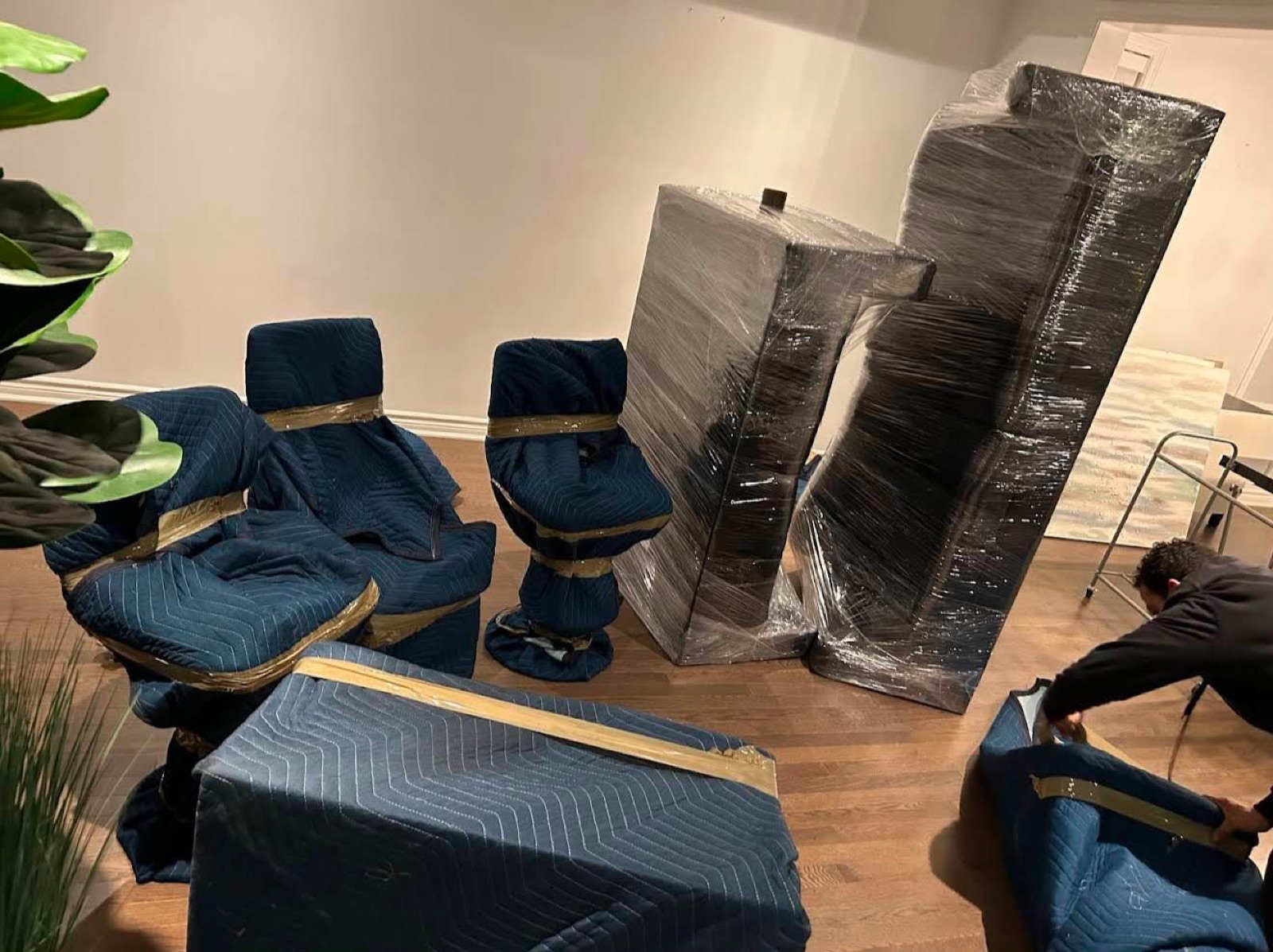
The piano stays in the room until the doorway is clear.
What the quote actually looks at
A fair quote starts with two addresses, not a price given on the phone with no detail. We ask for the floor you are leaving, the floor you are going to, whether there is an elevator, and how many steps there are if there is not. A house with a basement is not the same volume as a small apartment. A piano, a built-in fridge, or a very heavy bed has to be named at the start, or the first number will not hold on truck day. Distance counts too, especially when a bridge sits between the two doors. Where the truck parks is part of the time: a driveway, a dock, or a street that needs a permit is not the same half hour.
The quote is written, and it is free. It says whether packing, unpacking, or holding goods between two dates is included. It books nothing until you accept it. If a floor was left out, or twenty boxes appear in the morning that were not in the story, the work changes and we say so before going on. The aim is not a surprise at the end. The aim is that the text you read stays the text of the day, as long as the home you described is the home we find.
How the day actually goes
We arrive in the window we agreed. Someone on the crew says where we start: often the fullest room, or the one whose doorway blocks the others. You do not have to carry. You can sit, answer the phone, or simply point to the corner for the bed and the wall for the sideboard. A family member can be there for the decisions. One person confirms whether a piece goes or stays. Too many instructions at once slow everyone down and scuff the door frames.
Medication, papers, the charger, and a change of clothes stay with you, not at the back of the truck. So do the keys to both homes. If the building has an end time for the elevator, we keep it. A finished room and boxes grouped together is better than running past the hour and leaving everything in the lobby. At the end of the load, we do a last walk of the closets, the balcony, and the garage if you told us they are part of the trip.
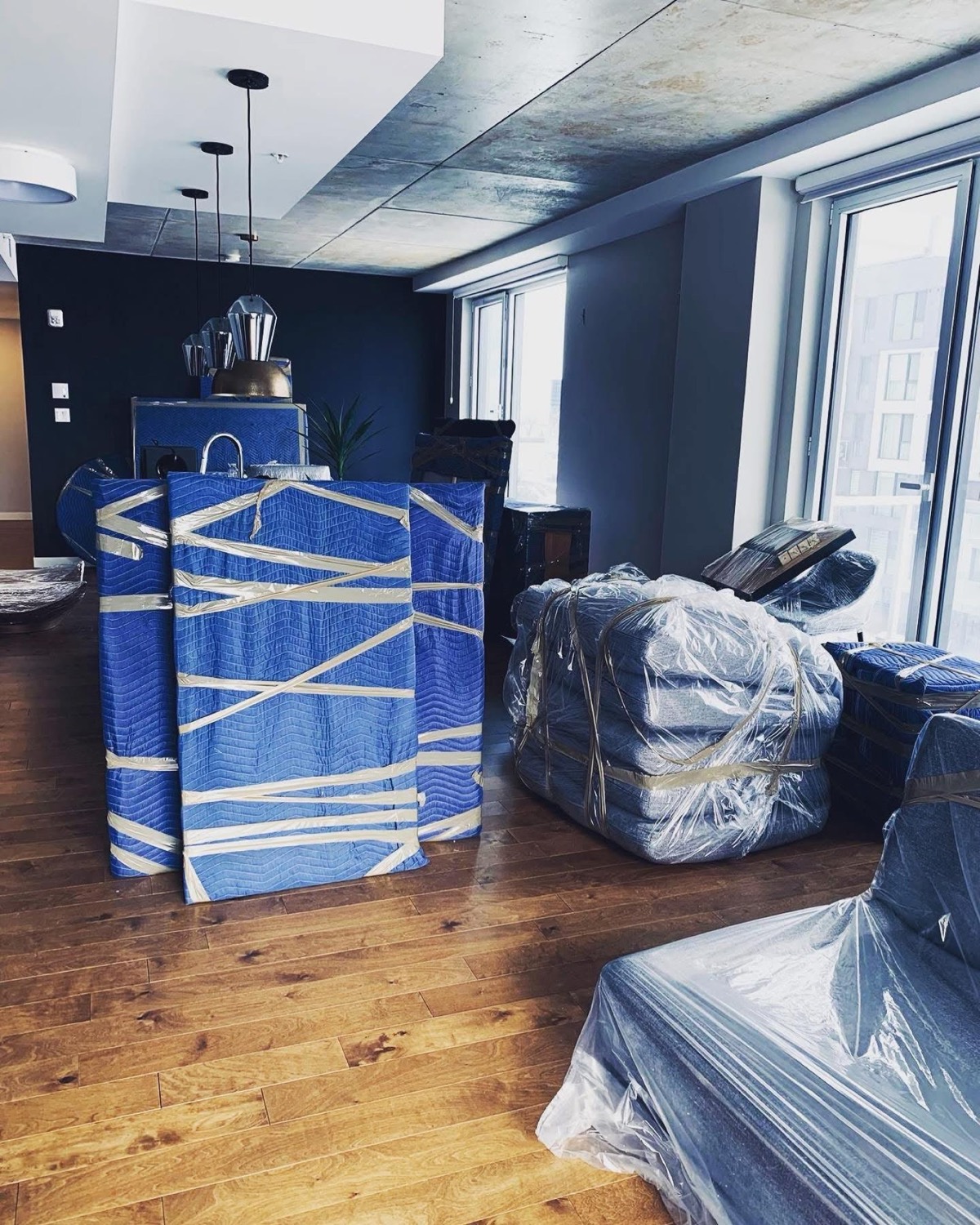
In a condo, the pads go on before the elevator.
Buildings, stairs, and parking
In Montreal and nearby, many moves are decided by the building’s rules more than by the road. The elevator is often booked days ahead, especially at the start of the month. Management sometimes wants a certificate of insurance before they release the time. Ask them the exact name to print and the deadline. We prepare the document. Then tell us the start and the end, and whether it is the service elevator or the one in the lobby. A narrow hall or a low ceiling changes how a sofa turns.
Without an elevator, the number of steps is the detail people forget most often. A third floor in a walk-up is nothing like a ground floor. Turning stairs in a duplex sometimes mean taking a piece apart on the landing. The truck does not always park at the door. Some streets need a permit, some buildings have the dock at the back, and in Old Quebec a large vehicle stops farther away. The longer the carry, the more it needs to be said beforehand, not on arrival.
Packing without losing track
Packing often takes longer than loading. If you do it yourself, start with the kitchen and with what breaks: dishes, lamps, mirrors, frames. Fill the empty space. A half-empty box gets crushed under the others. Write the room on two sides, not only on the top, because the top disappears in the stack. “Fragile” alone does not say whether the box belongs in the bedroom or the living room. If we pack, we use paper and pads, and the boxes carry the same kind of label.
Unpacking can be added to the quote, or left for the next day. Nothing requires every box to be opened that night. Open the essentials first: sheets, the coffee pot, one pot, toiletries. The rest can wait. What is not coming should not sit in a box “just in case”. A quote based on the whole house will be too high if half the furniture is staying with family. Decide before the truck, not while the ramp is already out.
A piano and a dresser, protected before they go out.
Inside the truck
The order in the truck is not random. Heavy, flat pieces go against the walls, strapped, so nothing walks when the brakes come on. Mattresses often stay upright, away from furniture corners. Heavy boxes go low, light boxes go high. A piano or an armoire is not braced like a carton of books. If the drive crosses a bridge or lasts more than an hour, the straps matter more. We do not fill the floor at random just so it fits.
You can look before the doors close if you want to see that the bed and the sideboard are actually there. Then the truck rolls. On a local job, unloading often follows the same day. On a longer distance, the delivery window is said ahead of time. You do not have to guess where the boxes are. If the two addresses are not ready on the same day, holding the goods between those dates can be planned. The place and the length of time belong in the quote, not as a surprise at the dock.
At the new address
At the new address, the same idea: a clear path, one person pointing to the rooms, and the building’s rules if there are any. We set furniture where you show us, not only inside the door. The bed goes against the wall you chose, and the sideboard too, as far as the room allows. Labelled boxes go to the room written on them. If a door is narrower than the piece, we say so before forcing it. Sometimes the feet have to come off, or the piece has to come in through another opening.
Plan a place to sit from the start, even a kitchen chair. The day is long for you as well. When the last room is empty in the old home and the new one has received what was on the list, we confirm it with you. If a box is missing, it is better to see that while the truck is still there. Keep the labels until the next day. They still help when you are looking for the lamp or the sheets.